Captivity under Amarantha
A Court of Thorns and RosesCaptivity under Amarantha is the system of imprisonment and subjugation imposed on Prythian after Amarantha seized the High Lords’ powers and transferred the courts’ political center to her palace beneath the sacred Mountain. It is not merely a confinement of individuals: it is a forty-nine-year regime in which weakened rulers, court inhabitants, servants, and even the boundaries between the faerie and mortal realms are held under threat. The captivity’s decisive significance lies in the way Amarantha converts deception, stolen magic, military force, and fear into a substitute for legitimate rule, while the suffering of the courts becomes the hidden history behind Feyre Archeron’s later struggle for liberation.
Causes and Seizure of Power
The captivity grows out of the long history between the Mortal Realm and Prythian. Mortals had once been enslaved by High Fae overlords and had built their civilizations through forced labor, but rebellion led to the War, whose devastation ended only when six mortal queens forged the Treaty. The resulting Wall divided the world: the North belonged to the High Fae and faeries, while mortals were left to survive in the South without magic. Because the mortal territory was too poor to maintain a standing army, its people relied on the Treaty as their principal protection, even while treating charms, iron, and threshold markings as an uncertain illusion of safety.
Amarantha exploited the political trust created after the War. A century before the main action, she arrived as an emissary from Hybern and spent fifty years moving from court to court as a supposedly independent courtier. Calling herself the Never-Fading Flower, she promised greater trade, communication, and shared resources between Hybern and Prythian, presenting her presence as an effort to repair the damage caused by the War. Her reputation concealed a more violent past: she had been the King of Hybern’s most lethal general, and she had fought on the front lines against mortals and against any High Fae or faeries who defended them.
Her hatred of humans was intensified by the fate of her sister, Clythia. Clythia loved the mortal warrior Jurian, who used the relationship to obtain information about Amarantha’s forces before torturing and killing her, crucifying her with ash wood. Amarantha’s later hatred of humans became part of the political danger she posed. After the Treaty, she reportedly butchered her own slaves rather than release them; yet the High Lords eventually believed her claim that grief had changed her, allowing her to establish the access and trust required for conquest.
Forty-nine years before Feyre Archeron’s arrival at Tamlin’s Estate, Amarantha used trade ships to bring her personal forces into Prythian without the knowledge of either the High Lords or even the King of Hybern. She waited until the High Lords had gathered at a ball held in her honor, then slipped a potion stolen from the King of Hybern’s spell book into their wine. Once they were helpless, she extracted their powers from within their bodies, leaving them only the basest elements of their magic. With the rulers weakened, she took control of Prythian within days. The captivity therefore begins as a political coup disguised as diplomacy and completed through the physical seizure of supernatural power.
Conditions of Captivity
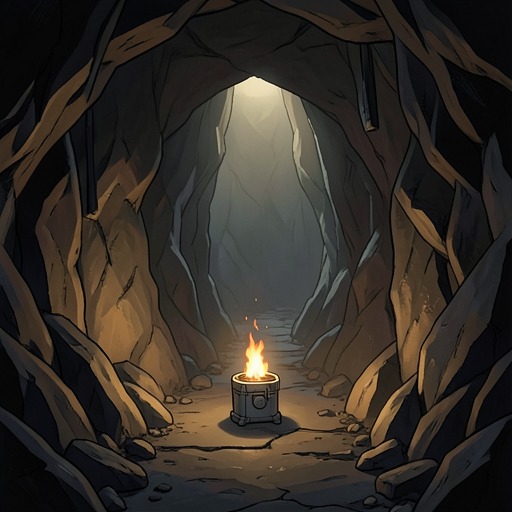
Amarantha declared herself High Queen of Prythian, replacing the older order in which the Seven High Lords ruled equally. She built her palace beneath the sacred Mountain and made the conquered courts answer to her there. The High Lords were bound to the land through the powers she had taken from them, limiting their ability to seek assistance or organize resistance. Her rule was reinforced by the presence of the most vicious creatures in Prythian and Hybern, including the Attor, which she sheltered while assembling an army for a future invasion of the Mortal Realm.
The system extended beyond the rulers themselves. When Amarantha seized Tamlin and most of the Spring Court after the forty-nine-year deadline expired, she transported them Under the Mountain to serve as her subjects. Creatures such as Alis were considered too lowly to be valuable subjects, although Amarantha could still murder them for sport. This distinction reveals the layered structure of her domination: rank determined how a being was used, but no rank guaranteed safety. The courts were not simply occupied by an outside army; their inhabitants were sorted into instruments, hostages, servants, informants, and disposable victims.
Resistance had already been crushed before Feyre learned the full history. The Day Court, Summer Court, and Winter Court attempted to call for aid from other faerie territories, using human visitors as messengers. Amarantha intercepted those messengers, most of whom were young women associated with the Children of the Blessed, and the women were killed before they could leave the shores. She then executed three rebellious High Lords and most of their families. The punishment prevented later successors from risking another challenge, turning individual terror into a durable political lesson.
The captivity also depended on the destruction of alternatives. Tamlin’s people attempted to find a human capable of breaking the curse by sending members of the Spring Court across the Wall in wolf form, hoping that a human girl might choose to kill one of them and later show compassion. For two years, Tamlin sent them out day after day, while the deaths of those who failed to return reached him through his bond with them. When only a dozen remained, the losses broke him and he ended the effort. His retreat did not mean that the curse had become harmless; it meant that Amarantha’s order had made even rescue dependent on repeated sacrificial exposure to mortal fear and violence.
Life Beneath the Mountain
The captivity forms the concealed background to the apparently safer life at Tamlin’s Estate. The estate’s borders, its servants’ masks, and its separation from the wider courts offer only a temporary shelter within a conquered land. The contrast is especially sharp during the seasonal ceremonies. Fire Night, or Calanmai, begins with drums calling from beyond the garden and fires burning in the distant hills. Lucien Vanserra explains that the Great Rite is the annual exchange through which each of the Seven High Lords renews the magic of the land: power comes from the earth and returns to it. Under Amarantha, however, the High Lords’ connection to their lands has been exploited as a means of control, so an act that should restore communal balance exists within a political system of forced submission.
Solstice offers another contrast. Tamlin explains that it celebrates the equality of day and night and temporarily allows faeries to set aside distinctions of rank and court, becoming simply themselves. Such festivities suggest a communal life not organized entirely by hierarchy. The captivity makes that equality precarious. Celebration, ritual, and ordinary courtly intimacy continue, but beneath them lies the knowledge that Amarantha can summon rulers, seize subjects, and convert public gatherings into demonstrations of obedience.
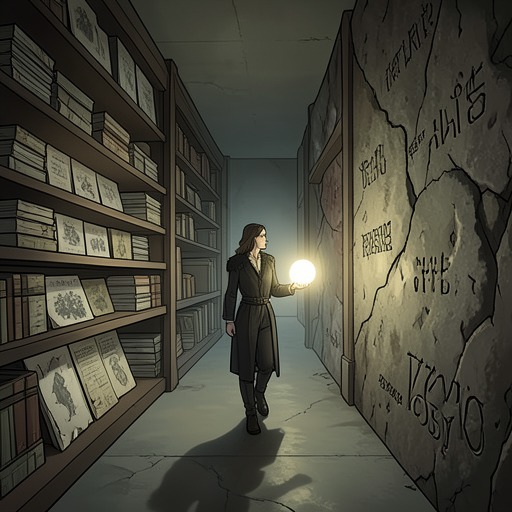
The Mountain is consequently both a physical prison and a stage on which power is displayed. When Rhysand enters the throne room, the crowd’s attention turns toward him, while Lucien Vanserra’s brothers monitor him and approach with predatory interest. Amarantha summons Rhysand in the middle of this charged public space, and he guides Feyre Archeron through the parting crowd while instructing her to remain close and silent. The scene shows how captivity operates through surveillance and spectacle: movement is controlled, alliances are visible, and every encounter can be made into a test of vulnerability.
Consequences and Liberation
By the time Feyre Archeron reaches the heart of the conflict, the captivity has altered the political map of Prythian and endangered the Mortal Realm beyond it. Amarantha has spent forty-nine years consolidating power and gathering creatures from Prythian and Hybern, waiting for the right moment to break the Treaty and invade human territories. Reports of faeries crossing the Wall to attack mortals therefore acquire a political meaning: such incursions may be sanctioned parts of a larger campaign rather than isolated acts of violence. The captivity is both retrospective explanation and immediate military threat.
Its central reversal occurs when Amarantha’s apparent control breaks at the moment of Feyre Archeron’s death. After Feyre’s corpse lies before the queen, Amarantha backs away and whispers a plea. Golden light then blasts her across the room, and Tamlin attacks in his beast form, gripping her by the neck and driving her against the stone wall. The image reverses the established hierarchy: the queen who has spent decades compelling others to kneel is suddenly retreating from the dead body of the person whose courage has exposed the weakness in her rule.
Amarantha’s captivity thus ends not simply through the defeat of one tyrant but through the collapse of the fear-based order she had built. Her conquest had depended on stolen powers, manipulated trust, crushed rebellion, and the belief that no alternative was possible. The events beneath the Mountain reveal that the Treaty’s apparent stability, the courts’ rituals, and the High Lords’ authority had all been vulnerable to imperial infiltration. They also establish why liberation requires more than restoring titles: the conquered courts must recover political agency, communal trust, and the capacity to imagine a world beyond the boundaries Amarantha imposed.